
What does Smiljan Radic’s Pritzker Prize win signify for architecture?
Smiljan Radic Clarke’s recent accolade as the 2026 Pritzker Prize winner raises an important question: what does this recognition mean for the future of architecture in Chile and beyond? The answer lies in Radic’s unique approach to design, which emphasizes emotional presence and a deep connection to the surrounding landscape. His win not only highlights his individual achievements but also positions him as a significant figure in the architectural community, following in the footsteps of fellow Chilean architect Alejandro Aravena, who won the same award in 2016.
Key Achievements and Contributions
Born in Santiago, Chile in 1965, Radic established his architectural studio in 1995 and has since completed over 60 projects, primarily in his home country. His notable works include the Teatro Regional del Bío Bío and the acclaimed Serpentine Pavilion, which significantly elevated his international profile in 2014. The Pritzker Prize, often referred to as the Nobel of architecture, includes a $100,000 grant and a bronze medal, further underscoring the significance of this honor.
Design Philosophy and Style
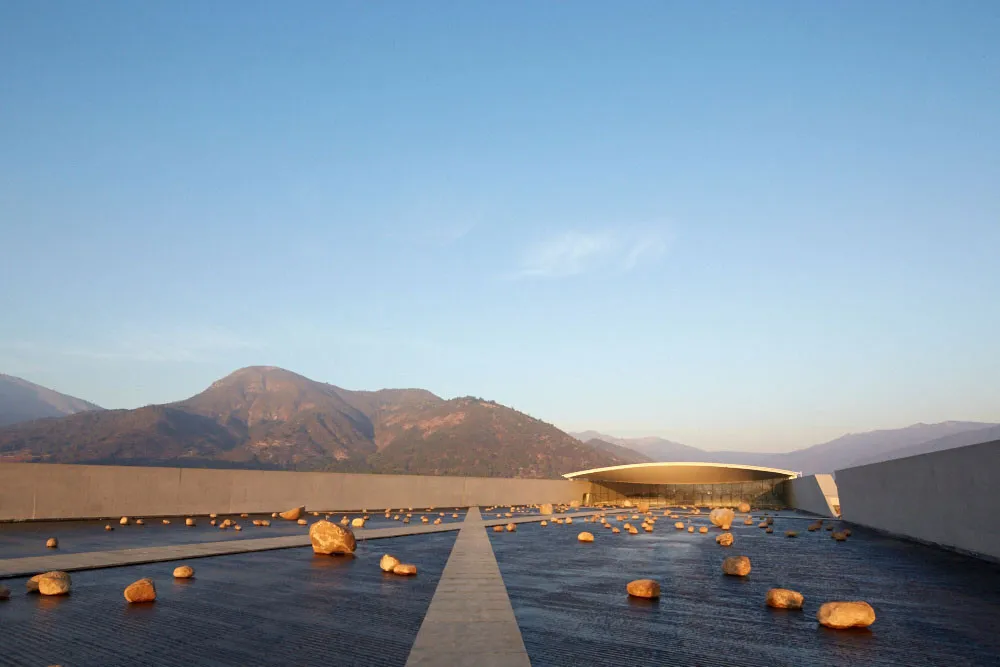
Radic’s architectural style is characterized by a balance of fragility and monumentality, often incorporating natural materials that reflect the environment. He has a distinctive ability to create structures that resonate emotionally with their surroundings. As he stated, “Architecture exists between large, massive, and enduring forms — structures that stand under the sun for centuries, waiting for our visit — and smaller, fragile constructions — fleeting as the life of a fly, often without a clear destiny under conventional light.” This philosophy is evident in his diverse portfolio, which showcases a commitment to innovative design.
Recognition and Impact
His win has been met with acclaim from peers, including Alejandro Aravena, who remarked, “In every work, he is able to answer with radical originality, making the unobvious obvious.” This acknowledgment from a fellow Pritzker laureate highlights the impact of Radic’s work on contemporary architecture. His designs not only challenge conventional norms but also invite viewers to engage with the built environment in new ways.
Future Prospects
As Radic steps into the spotlight following his Pritzker Prize win, he acknowledges the challenges that come with increased visibility. He expressed, “Yes, completely. [It’s] a huge honor. And possibly, in the very near future, a bit of a headache, since it will probably mean being far more exposed than I would like.” This statement reflects the dual nature of recognition in the architectural field, where success can lead to both opportunities and pressures.
Continuing Legacy
With a career that spans several decades, Radic’s influence on architecture is likely to grow. His approach, which emphasizes material curiosity and a deep connection to the landscape, resonates with current trends in sustainable and thoughtful design. As he continues to explore new projects, the architectural community will be watching closely to see how his work evolves and what new contributions he will make.
Smiljan Radic’s achievement as the second Chilean architect to win the Pritzker Prize marks a significant moment in the architectural landscape. As he continues to push the boundaries of design, his work will undoubtedly inspire future generations of architects. Details remain unconfirmed regarding his upcoming projects, but the anticipation surrounding his future endeavors is palpable.