
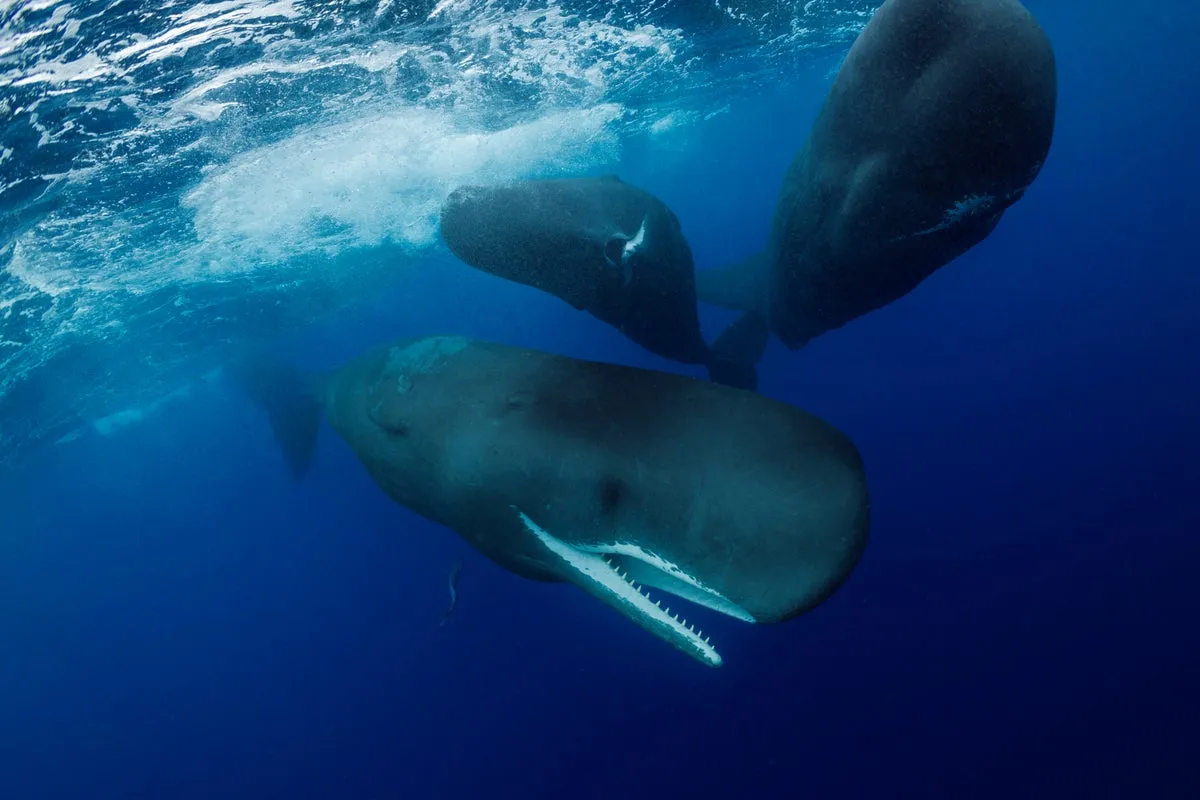
“Sperm whales are known to socialize, but scientists were stunned when they saw a group of sperm whales gather as one of them gave birth.” This striking observation was made by the Project CETI team during a remarkable event off the coast of Dominica on July 8, 2023.
The birth occurred at precisely 11:45:45 local time, marking a significant moment in the study of these majestic creatures. The newborn calf surfaced for the first time just two minutes later, at 11:47, showcasing the immediate bond formed between mother and offspring.
The entire birthing process lasted approximately 34 minutes, from the first sighting of the calf’s flukes to the completion of the birth. During this time, the unit involved consisted of 11 sperm whales, including 8 adults and 3 calves, all of whom played a role in supporting the mother, identified as Rounder.
After the birth, the newborn was often lifted out of the water by group members, a behavior that highlights the social structure and cooperative nature of sperm whales. This event adds to the extensive documentation of this particular sperm whale unit, which has been sighted in 873 unique clusters since 2005.
Project CETI, dedicated to studying cetacean behavior, was fortunate to witness this event, which emphasizes the importance of social interactions among sperm whales. The team recorded a total of five hours and minutes of encounters during this significant observation.
As researchers continue to study these remarkable marine mammals, the insights gained from such events contribute to our understanding of their social dynamics and reproductive behaviors. The birth of the calf not only represents a continuation of the species but also offers a unique opportunity for scientists to observe and learn more about sperm whale interactions.
Details remain unconfirmed regarding the long-term implications of this birth on the unit’s dynamics, but the immediate reactions from the group suggest a strong communal support system.