
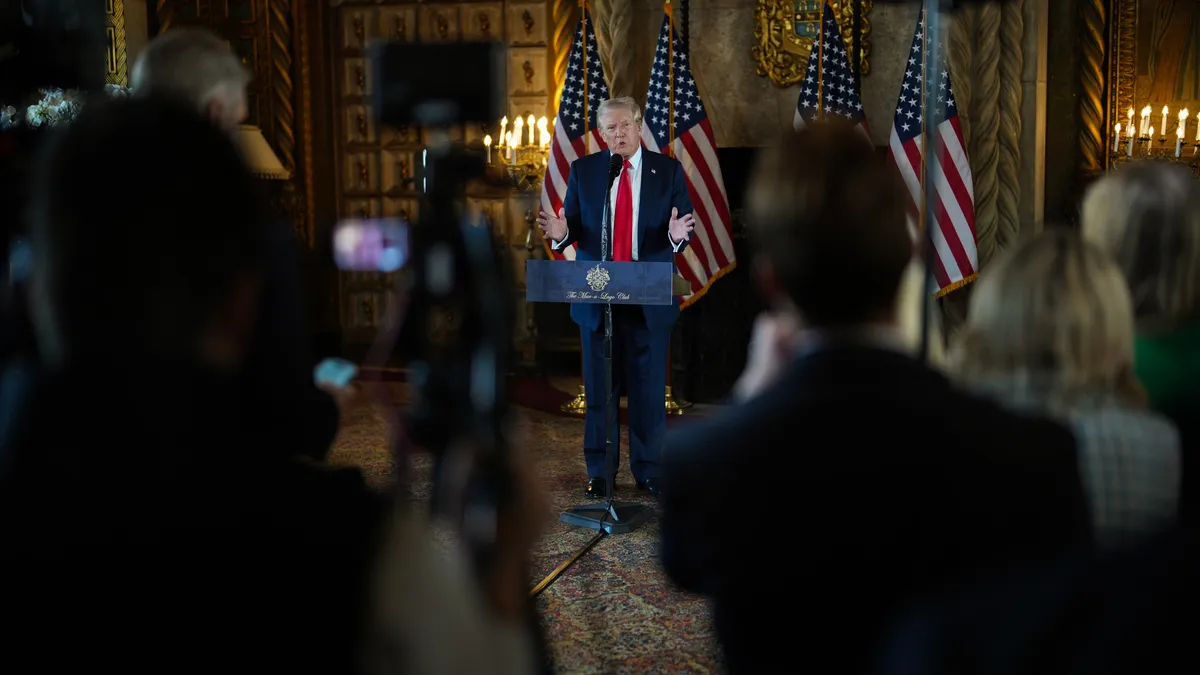
What are the implications of Trump’s recent press conference regarding Iran? In a fiery address, Trump outlined the U.S. military’s actions and future strategies, emphasizing that the situation remains tense and unpredictable.
Trump held a press conference following a controversial post about Iran, where he described a successful rescue mission for a downed airman. He stated, “But in the U.S. military, we leave no American behind,” highlighting the commitment to protect U.S. personnel abroad.
During the conference, Trump issued a stark warning to Iran, declaring, “The entire country can be taken out in one night and that night might be tomorrow night.” This statement underscores the escalating rhetoric as tensions between the U.S. and Iran continue to rise.
Supporting Trump’s claims, CIA Director John Radcliffe, Defense Secretary Pete Hegseth, and Gen. Dan Caine recounted the details of the rescue operation, reinforcing the administration’s narrative of military success.
However, the situation is complicated by Iran’s recent actions, including the closure of the Strait of Hormuz, a critical chokepoint for global oil transport, with 20 percent of the world’s oil passing through it. This closure has contributed to a significant increase in gas prices, which have reached $4 per gallon in the U.S.
Polling indicates that a majority of Americans oppose the war in Iran, with only 43 percent of Republicans strongly approving of Trump’s job performance, a decrease from 52 percent in January. Despite this, Trump maintains that the conflict will last roughly six weeks.
Iran has rejected the latest ceasefire proposal, insisting on a permanent end to hostilities. Mojtaba Ferdousi Pour, an Iranian official, stated, “We only accept an end of the war with guarantees that we won’t be attacked again,” indicating the complexities of achieving peace.
As the situation unfolds, uncertainties remain regarding the timeline for the war’s conclusion and the feasibility of Trump’s objectives. Details remain unconfirmed, leaving many questions about the future of U.S.-Iran relations and global stability.