
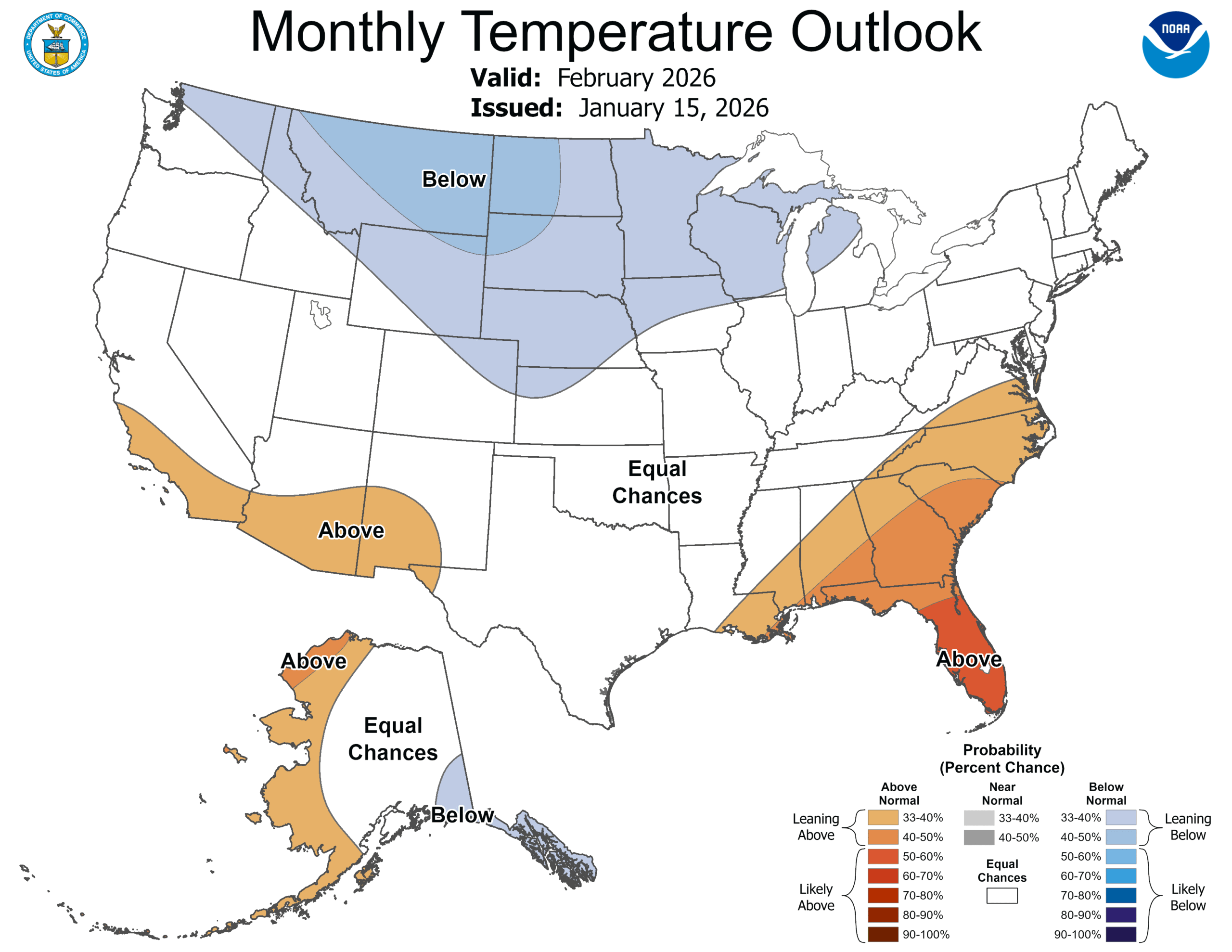
Introduction to Weather Maps
Weather maps are crucial tools in meteorology, allowing us to visualize and predict atmospheric conditions. With climate change impacting weather patterns globally, the significance of accurate weather forecasting has never been more apparent. Understanding weather maps not only aids in day-to-day planning but also plays an essential role in disaster preparedness and response.
What Are Weather Maps?
Weather maps are graphical representations that display various meteorological elements at a specific time. They include data such as temperature, precipitation, wind patterns, and pressure systems. These maps are created using meteorological data collected from various sources, including satellites, weather stations, and radar systems.
Recent Developments in Weather Mapping
In recent years, advancements in technology have transformed how weather maps are generated and interpreted. The use of artificial intelligence and machine learning has allowed meteorologists to analyze vast amounts of data more efficiently, leading to more accurate predictions. For instance, just last month, the National Weather Service (NWS) implemented upgraded radar technology that has enhanced real-time tracking of storms and weather systems.
The Role of Weather Maps in Daily Life
Weather maps serve various purposes in daily life, from helping individuals decide what to wear to aiding farmers in planning crops and harvesting. On a larger scale, government agencies rely on weather maps to issue warnings during severe weather events, such as hurricanes or tornadoes, potentially saving thousands of lives. The Federal Emergency Management Agency (FEMA) emphasizes the importance of understanding weather data for emergency preparedness, especially in areas prone to extreme weather.
Conclusion and Future Outlook
As the climate continues to change and extreme weather events become more common, the need for accurate weather maps will only grow. The integration of new technologies will likely lead to even more precise forecasts, further enhancing our ability to respond to and prepare for different weather scenarios. For individuals and businesses alike, staying informed through weather maps will remain a key strategy in navigating both daily weather fluctuations and extreme weather conditions.