
The wider picture
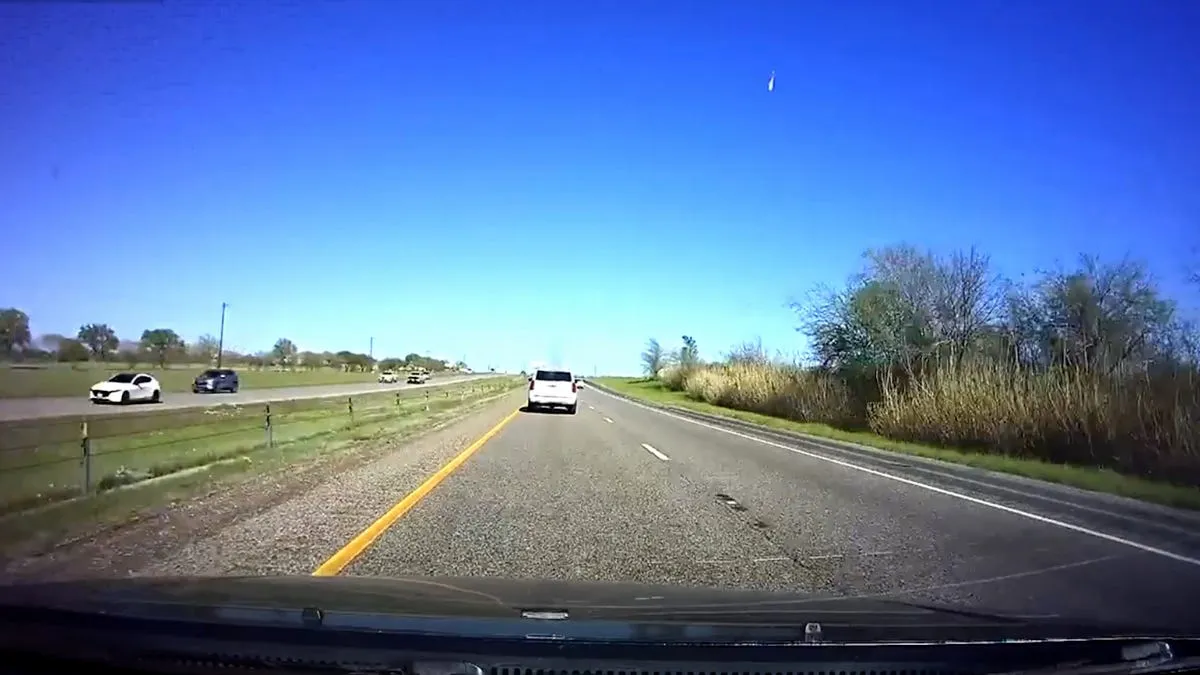
On March 21, 2026, a meteor weighing approximately one ton broke apart over Houston, Texas, creating a loud boom that startled residents and left fragments scattered across the area. This incident occurred shortly after another meteor exploded over northeast Ohio just days earlier, highlighting a series of meteor sightings that have captured public attention.
The meteor was first spotted around 5:40 p.m. ET, and eyewitnesses reported over 150 sightings across Texas. The meteor, which measured about three feet wide (one meter), broke apart at an altitude of 29 miles (46 kilometers) above Bammel, just north of downtown Houston. NASA confirmed that the meteor released energy equivalent to 26 tons of TNT, a significant amount that underscores the power of such celestial events.
In a striking incident, a piece of the meteorite reportedly penetrated the roof and ceiling of a home in Houston. Sherrie James, a resident of the affected area, recounted, “We heard a big boom. My grandson went to check and said there was a hole in the ceiling… then I saw the rock, and I thought, ‘that looks like a meteor.'” This personal account illustrates the direct impact of the meteorite on the local community.
NASA has taken steps to assess the situation further by releasing a ‘strewn field’ map that indicates where meteorites may have fallen in Houston. The fragments are believed to have scattered across a populated area between Willowbrook and Northgate Crossing, raising concerns about potential damage or hazards to residents.
Additionally, the meteor was visible on lightning mapping instruments aboard NOAA’s GOES satellites, which provided valuable data on the event. Experts noted that most of the meteor’s mass was reduced to atoms and fine droplets during the fireball, with only a small percentage surviving to reach the ground. This phenomenon is typical for meteors entering the Earth’s atmosphere.
As observers and officials continue to analyze the event, they emphasize the importance of understanding such occurrences. The incident in Houston is a reminder of the dynamic nature of our solar system and the potential for meteorites to impact populated areas. Details remain unconfirmed regarding the total number of fragments that may have landed or any additional damage caused.
In the aftermath of this event, scientists and space agencies are likely to conduct further investigations to gather data and improve our understanding of meteorite phenomena. The public is encouraged to report any findings related to the meteorite fragments as the community comes together to assess the situation and ensure safety.