
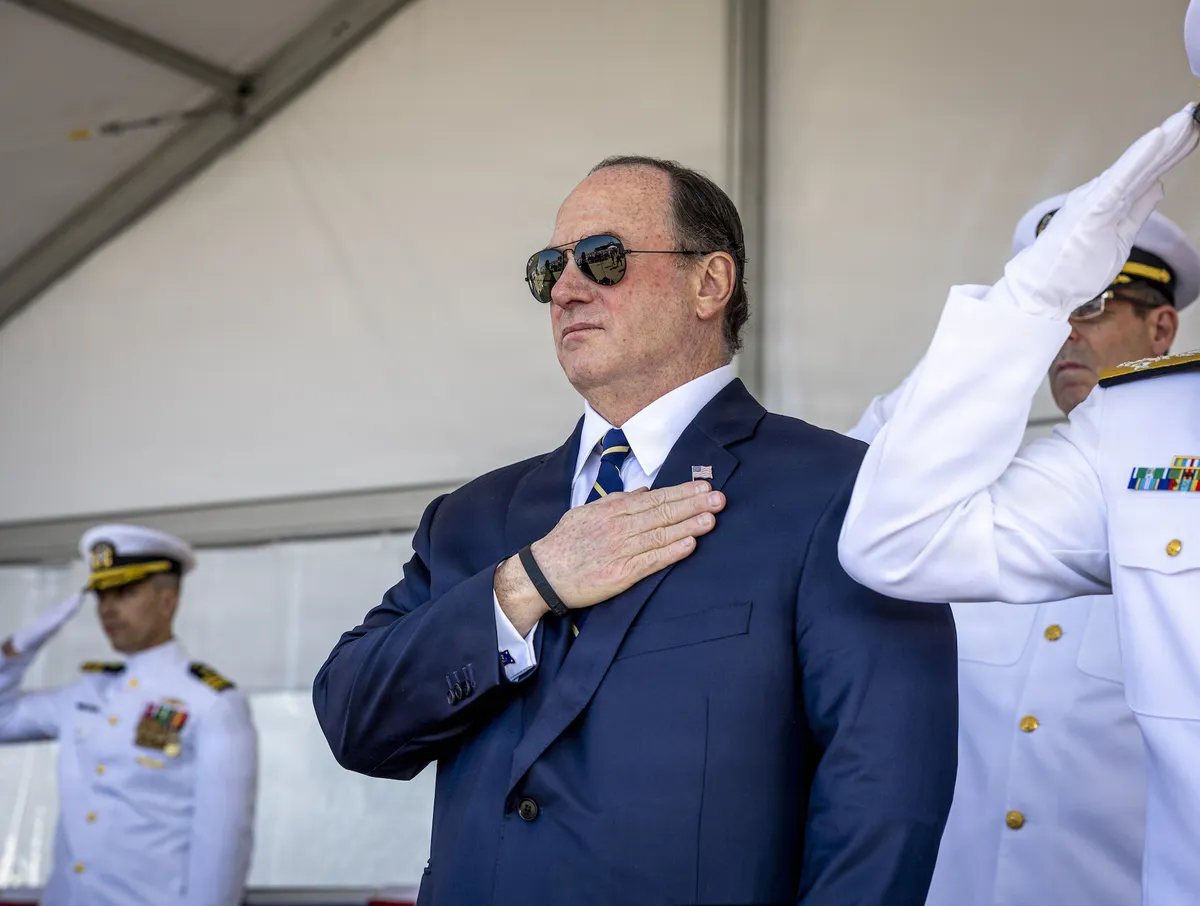
“Secretary of the Navy John C. Phelan is departing the administration, effective immediately,” announced Pentagon spokesman Sean Parnell on April 22, 2026. This sudden shift marks a significant change in leadership at a time when the U.S. Navy is navigating complex challenges both domestically and internationally.
Hung Cao has been appointed as acting Secretary of the Navy following Phelan’s abrupt departure. Previously serving as the Under Secretary of the Navy, Cao brings a wealth of experience to this new role. His background includes 25 years of service as a U.S. Navy captain, during which he deployed to Iraq, Afghanistan, and Somalia—conflicts that shaped his understanding of modern military needs.
That context matters because it highlights why Cao’s leadership may steer the Navy in a direction focused on technological advancement and operational efficiency. He has emphasized that “they deserve the best training and weapons available.” This statement reflects not only his commitment to enhancing military readiness but also his belief in empowering service members to innovate without being hindered by bureaucracy.
Cao’s academic credentials further bolster his profile; he holds a bachelor’s degree in ocean engineering from the U.S. Naval Academy and a master’s degree in applied physics from the Naval Postgraduate School. Such qualifications are crucial as the Navy increasingly integrates cutting-edge technology into its operations.
However, Cao’s appointment comes amid a backdrop of political maneuvering within the Pentagon, particularly during Trump’s administration—characterized by rapid leadership changes. Phelan himself was a major donor to Trump’s campaign before his tenure as Secretary of the Navy, raising questions about how political affiliations influence military appointments.
Yet, it’s important to note that Cao has faced challenges outside his military career; he ran unsuccessful campaigns for both the U.S. Senate and House in Virginia during 2022 and 2024. These experiences may shape his approach to leadership within an increasingly politicized environment.
Furthermore, Cao has voiced criticism regarding COVID-19 vaccine mandates for service members and expressed skepticism about current diversity, equity, and inclusion efforts within the military—a stance that could resonate with certain factions within Congress but alienate others.
As we look ahead, it will be interesting to see how Hung Cao navigates these complexities while leading modernization efforts for the Navy’s IT systems—an area where he has already made significant contributions during his previous role. The coming months will reveal whether his vision aligns with broader strategic goals set forth by the Pentagon in an evolving global landscape.