
Introduction
In the landscape of LGBTQ+ rights in the United States, the Supreme Court’s stance on gay marriage remains a crucial issue. With several states enacting legislation affecting marriage equality and ongoing societal debates, understanding the Supreme Court’s role is vital for advocates and citizens alike. As of recently, the court’s decisions and considerations have significant implications for the future of gay marriage and LGBTQ+ rights nationwide.
Recent Court Cases and Developments
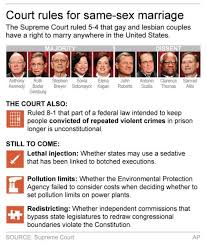
In June 2015, the landmark decision in Obergefell v. Hodges established the constitutional right to marry for same-sex couples, fundamentally shifting the legal landscape across the nation. However, recent indications suggest that the court may revisit issues surrounding marriage equality and LGBTQ+ rights.
In October 2022, the Supreme Court began entertaining cases that could impact previous rulings related to LGBTQ+ rights, leaving advocates concerned yet hopeful. The court has recently been approached to decide on matters involving state laws that potentially discriminate against LGBTQ+ individuals, sparking discussions on the balance between religious freedoms and anti-discrimination protections. Moreover, these cases are becoming more frequent, given that certain states have moved towards enacting laws that challenge previous federal protections.
Implications for LGBTQ+ Rights
The role of the Supreme Court in defining the scope of rights for LGBTQ+ individuals extends beyond marriage equality. As societal acceptance of diverse sexual orientations and gender identities continues to evolve, so does the legal framework governing these rights. Advocacy groups are on high alert as the Supreme Court will be the final arbiter of many contentious issues, including employment discrimination, adoption rights, and healthcare access for LGBTQ+ individuals.
Experts indicate that the upcoming court sessions may provide a platform for revisiting fundamental rights, which could either consolidate or undermine the progress made in recent years. With public opinions shifting notably in favor of marriage equality, the intertwining of law and public sentiment presents an unpredictable future.
Conclusion
The developments concerning gay marriage and LGBTQ+ rights at the Supreme Court are of immense significance, reflecting both societal changes and enduring challenges. As legal battles unfold, advocates and citizens must remain vigilant, prepared to engage with the evolving dialogue around these rights. While the current trajectory seems to support the ideals of equality and representation, the outcomes of forthcoming cases will determine the extent to which these values can be upheld within the legal system. The court’s decisions will be vital indicators of the future of gay marriage and the broader spectrum of LGBTQ+ rights in America.